Showing posts with label Bracewell. Show all posts

Wednesday, October 29, 2014

The Long Delay Echoes

The subject here is a scientific mystery that was well documented by European scientists in the 1920s and 1930s, well before any man made objects were launched into outer space, and then was largely forgotten. The phenomenon has since apparently disappeared, although anecdotal reports still pop up from time to time, and a low level of interest persists. We are discussing it here, because although no one knows for sure what caused the Long Delay Echoes, one plausible explanation is Bracewell Probes. The Long Delay Echoes (LDEs) just possibly might be a clue to how to find such a probe.

Some Basic Background You may Wish to Skip

 I'm sure you know that radio waves generally travel at the speed of light, and can be bounced off of various surfaces and also off the Earth's ionosphere if the radio wavelength is long enough. The speed of radio waves can be a bit slower if they are traveling through a medium such as a plasma or water, but generally the speed is not much less than the 300,000 kilometers per second we are used to. That means, if we send a radio signal out, and see it come back to us, then to calculate the distance to the reflector, we divide the time delay in seconds by 2 (since it went out and back), and then multiply by 300,000 kilometers per second to get the distance. Then, if we send out a radio signal and it comes back 2 seconds later, it must have traveled 300,000 km each way, or most of the way to the Moon. Amateur radio operators often enjoy bouncing their signals off the moon, which generally exhibits a very weak echo delayed about 2 and one half seconds. Strong echoes, or echoes delayed longer than 2.5 seconds, are not moon echoes.

Since the 1960s, there are many radio repeaters in Geosynchronous orbit, but the round trip delay is much shorter than the moon -  less than half a second, and you generally won't see a satellite echo at all unless your signal parameters are just right - and probably illegal.


Thursday, March 7, 2013

Friday, January 4, 2013

Searching for Bracewell Probes - part 2

In the first part, we talked about some of the variables that I think could control the observables of a Bracewell Probe.  This is essentially a first, crude move toward mapping our ignorance of these hypothetical machines.  We can't know what Bracewell probes are yet, or even if they exist at all, but perhaps we can constrain or at least make some reasonable assumptions about what they could be.

Thursday, November 15, 2012

Speculation - the only way to fly


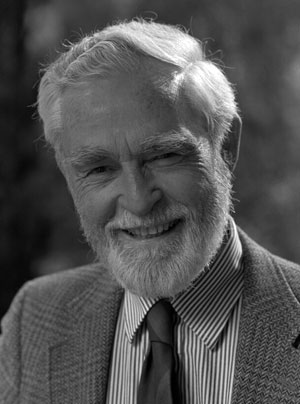
Ronald Bracewell
Here is another speculation, but probably not very original. In fact, it's a variation on the 1960 concept of a Bracewell Probe.  It's hard for me to imagine that some science fiction author or another hasn't treated this in some form.

In the future, we expect to be able solve these three broad classes of technological problem we haven't got a a handle on yet:
  1. Very large sensors that can remotely sense distant planets accurately enough to ascertain their habitability with a high confidence.
  2. The hosting of a human mind on a machine substrate - i.e. a truly intelligent machine.  This implies that the state of a human mind could be captured - "uploaded" onto a machine and captured in a data set. In other words, we could completely define what we now call the "self" in terms of data.  The crucial thing here (within an order of magnitude or so), is how much data.  Let's say it's about an exabit compressed, or  10^18 bits.  Some estimates are lower that, but I think we need lots of margin.  
  3. Travel across interstellar distance, although the problems of doing so quickly ( a significant fraction of the speed of light and exploiting time dilation effects) may prove to be insurmountable no matter how sophisticated our technology is, and at present we have only the broadest concept of how to cheat the speed of light limit.
Let's assume we could do both 1 and 2, but item 3 could only be done slowly, so that it takes hundreds or even many thousands of years to travel between the stars.  This would be a hopelessly tedious journey for a human or superhuman intelligence, and all the mass required for reliable life support would only slow it down and limit options for deacceleration.

So, we would want to send only a small mass to another star system and it would take a long time and cost a lot of energy.   However, we can transmit information far more cheaply and at the speed of light.  You might need a really big and powerful transmitting array, but this is just scaling up from current technology.  To transmit an exabit in a year you would need a transmission rate of about 30 gigabits per second -  well within plausibility, even over interstellar distances.  The size of the receiving antenna you would need on the other side would increase with the distance (roughly 100 meters on a side at 100 light years, given plausible assumptions about  the transmitter, noise temperature and losses), but such antennas can be made from gossamer materials that can be folded compactly.

Thursday, November 8, 2012

Review of "An Eerie Silence" by Paul Davies


I want my book reviews to be useful to you, the reader, who may not have read the book in question and are trying decide whether to spend your money and time to do so.  So, my purpose will not be to show you how cleverly I grok the text, but rather to lay out for you what your are likely to find interesting or helpful in the book and how much of your time will be invested.

For non-fiction books, you don't need to read every chapter, so I will break down the content of the book and try to help you decide if these are topics you are interested in.  Of course, I will only review a book I have read in its entirety.

I will also include interesting nuggets or quotes that struck me as particularly interesting.

The Synopsis

The Eerie Silence by Paul Davies

Paul Davies is a physicist and author who has been associated with the Search for Extraterrestrial Intelligence (SETI) much of his career.  He wrote this book inspired by a 2008 workshop he hosted to look for innovative ways to improve this search.


Who Should Read it?

Anyone interested in a scientific approach to the problems of searching for alien life in the cosmos. Only a general layperson's background in the sciences is required, although the background explanations in the book maybe too sketchy for some readers. If you want a more in-depth introduction to the science, I suggest reading David Grinspoon's "Lonely Planets", which takes the reader gently through basic science topics needed to understand the questions of alien intelligence.
Science Fiction writers should find a bounty of story premises here, as well.


Time investment

Modest. The book is not difficult and is reasonably well organized and written. Only 242 pages, which includes bibliography, end notes and index, and is divided into 10 chapters and an appendix.


Is it Worth Reading?

For me, the most interesting Chapters were 3, which discusses the fascinating concept of a shadow biosphere, and Chapters 5-8, which discuss recent thinking about how SETI can be improved and expanded, and the kinds of highly exotic phenomena we might encounter from highly advanced extraterrestrial civilizations if we search well enough and long enough. These chapters are rich in recent, provocative ideas.
Readers unfamiliar with SETI and astrobiology will find the entire book informative, although there are a number of other books and articles on the topic that would serve equally well or better.


Interesting Nuggets

Davies knew famed UFO researcher J. Allen Hynek, and even visited him at this home.
Davies is a member of the committee formulating what Earth's response "should" be (if any), should an alien signal be detected.


A Few Quotes

"Clearly, there could be a large number of alien probes in the solar system, and we would be completely unaware of them unless they signaled us."